

Key Takeaways
Choosing a replacement part is easier when you separate fitment, quality, and total cost rather than relying on a listing title alone. A little checking before checkout can save time and avoid a difficult return.
- Genuine, OEM, and aftermarket labels describe different things; verify what the seller means for the specific part.
- Confirm fitment using your Toyota’s exact model details and, where possible, its VIN or chassis number.
- Check stock location, delivery estimates, returns, and supplier support before ordering.
- Give extra scrutiny to safety-critical parts and inspect every delivery before installation.
- Compare the full cost, warranty terms, and installation needs—not just the displayed part price.
Understand aftermarket, genuine and OEM parts
When a Toyota needs a replacement part, the choice is not simply between the cheapest listing and the most expensive one. Genuine, OEM, and aftermarket describe different things, and sellers may use the terms in ways that need clarification. Start by checking who made the part, what it is designed to fit, and what documentation comes with it. That context makes it easier to weigh price against fit, support, and peace of mind.
How aftermarket parts differ from genuine Toyota parts
Genuine Toyota parts are sold as Toyota-branded replacement parts, while aftermarket parts are made by companies other than Toyota. An aftermarket part may be designed to fit a Toyota, but its materials, finish, specifications, and quality controls depend on its own manufacturer. A fitment claim is useful, but it does not by itself establish that the part is identical to a genuine one. Look for the maker’s name and a clear description of the intended application.
What OEM and aftermarket labels mean
OEM is commonly used to mean “original equipment manufacturer,” but a seller’s use of the term may not explain whether the item is Toyota-branded, made by an original supplier, or simply an alternative replacement. Ask what the label means for the exact listing rather than assuming all sellers use it consistently. These distinctions can help frame the question:
| Listing description | What to verify | Useful follow-up |
|---|---|---|
| Genuine Toyota | Toyota branding and part number | Is the part new and supplied in its original packaging? |
| OEM | The manufacturer and meaning of the label | Is it Toyota-branded, or an unbranded part from a named maker? |
| Aftermarket | The maker and stated vehicle application | Which model, year, engine, or variant does it fit? |
Treat the wording as a starting point, not a substitute for product details. If the seller cannot identify the manufacturer or explain the label, compare the listing with one that provides clearer information.
When an aftermarket part may be a suitable choice
An aftermarket part may be worth considering when its manufacturer, application, and condition are clearly stated and the part matches the repair you need. For less safety-critical items, a documented alternative can offer a practical balance of price and availability. The right decision depends on the particular component and the quality of the information available, not on the label alone. Check the specific application before deciding that a lower price makes it the better buy.
Trade-offs in price, fit and warranty
A lower purchase price does not always mean a lower repair cost. If a part does not fit, arrives without the expected hardware, or needs extra work to install, the initial saving can disappear. Warranty terms also differ, so check who handles a claim, how long coverage lasts, and whether labor is excluded. For a repair where reliability matters most, weigh those terms alongside the part’s price and documented details.
Find the right part for your Toyota
Correct fitment begins with the vehicle, not the search result. Toyota models can have different specifications across production years and variants, and even similar names may cover more than one configuration. Collect the details from your registration or vehicle documents before browsing, then confirm them against the seller’s application information. A careful match is especially useful when a listing covers several generations or trims.

Identify your model, year and variant
Write down the model, year, trim or variant, and any engine or drivetrain information you can confirm. A broad model name may not be enough: production changes can affect the shape, connections, or specification of a replacement part. If the vehicle has been modified or its registration details do not answer the question, check its service records or ask a qualified professional to help identify the configuration. Use the most specific details you have when contacting a seller.
Use the VIN or chassis number to confirm fitment
A VIN or chassis number can help a supplier narrow down which vehicle configuration you have, but it is only useful if the seller can use it to check the relevant application. Provide the number through an appropriate, secure channel and ask for fitment confirmation for the exact part, not a general assurance that it suits the model family. For older imports or vehicles with unusual specifications, ask whether the supplier needs a chassis number or additional details. Keep the seller’s confirmation with your order records.
Check engine, trim and drivetrain differences
Engine size, trim, drivetrain, and body style can affect which component fits, even when two vehicles share a model name and year. Before ordering, compare the listing’s stated application with the vehicle details and note any exclusions. When more than one option appears to match, ask the supplier what information distinguishes them rather than choosing by appearance. A short fitment check can prevent ordering a part that is close but not correct.
Match part numbers and superseded listings
If you have the part number from the existing component or a previous invoice, compare it with the listing and ask whether a different number is a confirmed replacement. Part numbers can change over time, and a superseded listing may refer to a revised part, but the change should not be assumed to fit every configuration. Ask the seller to confirm compatibility for your vehicle and explain any included hardware or changes in the listing. Save the answer in writing in case you need to resolve a mismatch.
Choose the right Australian supplier
A supplier is part of the purchase decision, not just the route to checkout. Listings can vary in how clearly they describe the maker, fitment, condition, and warranty, while delivery and return arrangements affect the real convenience of an order. Compare the information and support you can actually access before paying. For buyers looking for toyota aftermarket parts Australia, those checks matter whether the purchase is local or shipped across the country.
Compare specialist stores, marketplaces and local retailers
Different types of sellers may provide different levels of product detail and assistance, so focus on the specific listing and its terms rather than assuming one channel is always best. Check whether the item is new or used, who made it, and whether the seller identifies the vehicle applications. A local retailer may make it easier to ask a question in person, while an online listing may offer more time to compare details. In either case, clarity and a workable return process are useful signs of a well-managed purchase.
Check stock location, delivery times and returns
A quoted delivery estimate is more helpful when you know whether the part is already in stock and where it will ship from. Ask about dispatch timing, delivery to your postcode, and what happens if the item is delayed or arrives incorrectly. Return conditions deserve a close read, especially if the part is ordered to specification or sourced after you pay. Check these details before checkout so an attractive price does not come with a surprise wait or a return cost you did not expect.
Review supplier credentials and customer feedback
Look for consistent business contact details, clear terms, and product listings that answer ordinary buyer questions. Customer feedback can help reveal patterns in communication or delivery, but treat individual experiences as context rather than a guarantee of your own outcome. Give more weight to specific, recent comments than to broad praise with little detail. If essential information is missing, ask the supplier before placing the order.
Confirm support for fitment questions
A supplier who can respond to a precise fitment question may help you resolve uncertainty before it becomes a return. Share the model, year, variant, and relevant vehicle identification details, then ask for confirmation on the exact listing. A useful exchange should address the detail you raised rather than repeat a general compatibility claim. As a practical rule, keep the question and answer with your order confirmation.
A clear answer before purchase is usually easier to act on than a fitment dispute after delivery.
Use that principle when a listing is vague or more than one part appears to match. If you cannot get a direct answer, pause and compare another listing with better documentation.
Assess part quality and safety
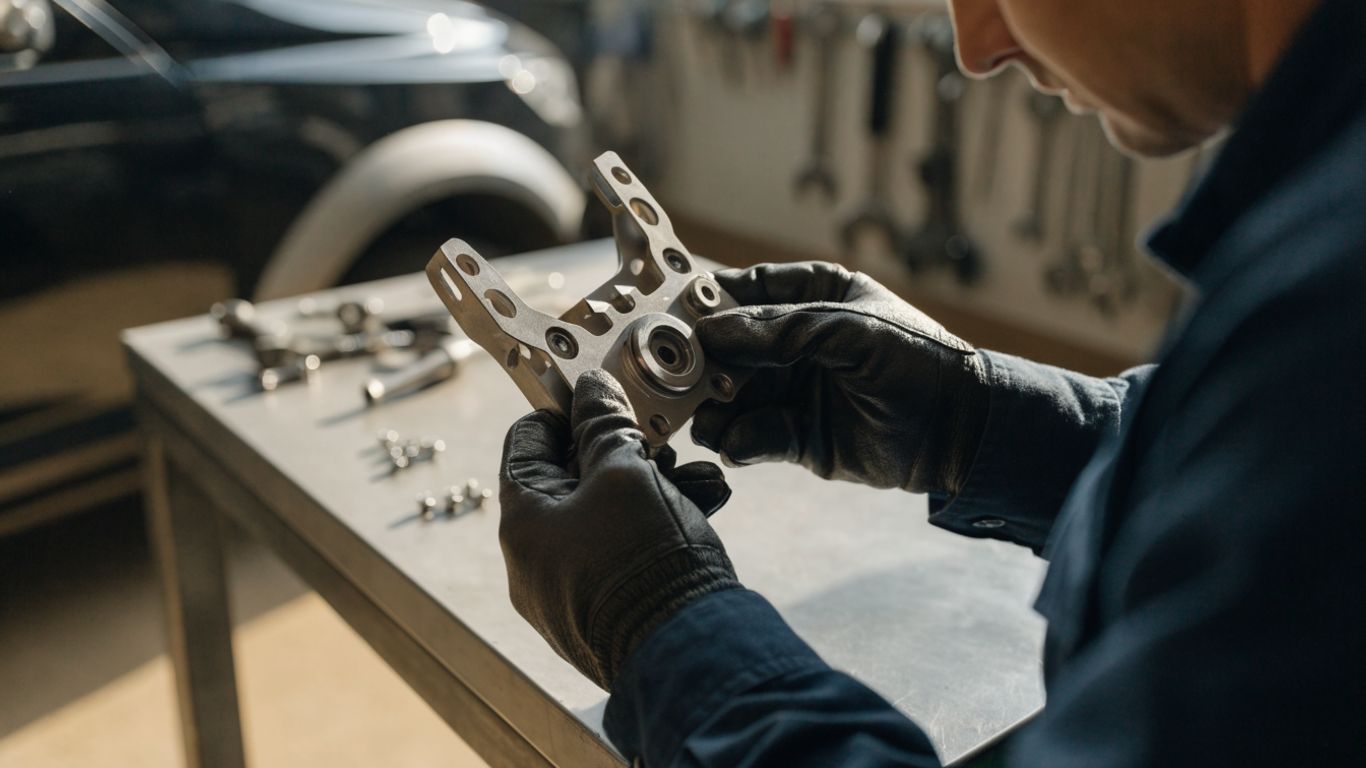
A part can look right in a photo and still leave important questions unanswered. Check the product description, maker, condition, and any available testing or certification information before deciding. The level of scrutiny should rise with the consequences of failure, particularly for components involved in controlling the vehicle. If you are unsure whether a part is suitable, seek advice from a qualified repair professional.
Look for clear manufacturer and product details
Useful listings identify the manufacturer or brand, part type, condition, and intended vehicle application. They should also make clear what is included, such as brackets, fasteners, or related components, rather than leaving you to infer it from a photograph. Compare images and descriptions carefully, but do not treat a visual resemblance as proof of compatibility. If a key detail is missing, request it before purchase.
Check certifications and testing where relevant
Some components may be subject to applicable standards, certification, or testing requirements, while others may not have the same type of documentation. Ask what evidence is available for the specific part and verify that any claimed approval applies to the item being sold. Avoid relying on a vague phrase such as “tested” without knowing what was tested and by whom. When the requirements are unclear, a qualified repairer or relevant authority can help you determine what applies.
Take extra care with brakes, steering and suspension
Brakes, steering, and suspension are directly tied to vehicle control, so a low price or a broad fitment claim should not settle the decision. Check the part’s maker, specification, application, and condition, and ask an experienced professional if the listing leaves room for doubt. A correct part still needs to be installed as intended. If you are uncertain about either the part or the repair, avoid improvising.
Inspect parts before installation
When the delivery arrives, compare the part and its packaging with the order details before beginning work. Check for shipping damage, missing pieces, obvious defects, and differences in connectors or mounting points. If something does not match, photograph it and contact the seller before installation or alteration. That makes it easier to establish what arrived and may preserve your options under the supplier’s return terms.
Compare total costs and warranty terms
The amount shown beside a part is only one part of the buying decision. Shipping, taxes, installation, return costs, and warranty limits can all affect what the repair ultimately costs. Compare the full terms for each option before deciding that one is better value. A little arithmetic now can prevent a frustrating surprise later.
Factor in shipping, taxes and installation
Check the delivered price for your location, including any applicable taxes and handling charges, and note whether delivery is included or calculated at checkout. Then consider labor, tools, and any related items needed to complete the repair. A part that appears cheaper may cost more once shipping or a second visit to the workshop is included. Compare the same scope of work across options so the figures are meaningful.
Compare warranty coverage and exclusions
Read the warranty terms for the exact item and identify who provides the coverage, how long it lasts, and what the buyer must do if a fault occurs. Check for exclusions related to installation, wear, or use, and whether the seller requires proof of professional fitting. Do not assume that a warranty covers labor or the cost of removing a failed part. If the wording is unclear, request an explanation before you order.
Understand return conditions for special orders
Special-order parts may have different return rules from items held in stock. Before paying, find out whether cancellation is possible, whether a restocking or freight charge applies, and what happens if the supplier has ordered the wrong application. Keep a copy of the relevant terms and any fitment confirmation. Knowing the process in advance helps you judge whether the risk is acceptable.
Consider the impact on your vehicle warranty
Warranty questions depend on the vehicle, the repair, and the terms that apply to it, so avoid assuming that fitting an aftermarket part automatically cancels coverage—or that it can never affect a claim. Keep records of the part, its supplier, and the installation, and ask the relevant warranty provider or a qualified repair professional about a concern tied to your specific repair. If the vehicle is still covered, get clear guidance before work begins. Documentation is useful if questions arise later.
Buy and install parts with confidence
Once the part and supplier have passed your checks, take a moment to make the order details precise. Confirm the application, delivery arrangements, and return terms in writing, then keep the records together. Think about whether the repair is within your skills and whether specialized tools or procedures are needed. A careful handoff from purchase to installation makes it easier to spot a problem early.
Confirm fitment before placing an order
Review the part number, vehicle details, and seller’s fitment confirmation immediately before checkout. If you have discussed the application with the supplier, make sure the answer refers to the exact item and your vehicle’s configuration. Check quantity and included components as well; a correct main part may not include every item needed for installation. Resolve any discrepancy before submitting payment.
Keep invoices and product documentation
Save the invoice, listing, warranty terms, fitment correspondence, and any instructions supplied with the part. These records help establish what you bought and make it easier to discuss a return or warranty question. Store the documents with the vehicle’s service history rather than relying on a listing that could later change. Clear records are useful even when the repair goes smoothly.
Decide when professional installation is worthwhile
Some repairs may be straightforward for an experienced owner, while others require specialist tools, diagnostic steps, or knowledge of safety procedures. Consider the complexity of the job, the risk of an incorrect installation, and the cost of putting a mistake right. For safety-critical work or any task you are unsure about, a qualified repairer is the more prudent choice. Ask whether labor coverage or warranty conditions depend on who installs the part.
Test the repair and monitor for issues
After installation, check the repair in a safe, appropriate way and follow any instructions provided by the part maker or installer. Pay attention to unusual noises, warning lights, leaks, or changes in handling, and stop driving if the vehicle seems unsafe. Contact the installer or seller promptly if something is not right, and keep notes about when the issue appeared. A careful follow-up can help identify a problem before it becomes more serious.
Conclusion
Buying Toyota aftermarket parts in Australia is less about finding a single perfect label and more about checking the details that matter for your vehicle. Confirm fitment, look for clear product information, compare the full cost and terms, and choose professional help when the repair calls for it. With those checks in place, you can make a more informed purchase and know what to do if the part or delivery does not match expectations.