

Key Takeaways
A little checking before you buy can help you find a suitable part and avoid surprises at delivery. Compare the part itself, the shipping terms, and the seller’s policies as one decision.
- Confirm that the part matches your Toyota’s model, year, trim, and any relevant vehicle details.
- Check what “aftermarket” means in the listing and compare it with genuine and OEM terminology.
- Read the full free-shipping terms, including order thresholds, location limits, and exclusions.
- Compare the delivered price and return conditions, not only the item price.
- Keep your order records and inspect the part before installation.
Understand what qualifies as an aftermarket part
The word “aftermarket” generally describes a part made by a company other than the vehicle manufacturer, rather than a Toyota-branded genuine replacement. That label alone does not tell you whether a component is suitable for your vehicle or how it compares in quality. Sellers may use related terms differently, so read the product description carefully. If you’re searching for toyota aftermarket parts free shipping Australia, begin by identifying the type of part you need and the terminology used in its listing.
Aftermarket, genuine, and OEM parts compared
These labels can point to different sources, but listing language is not always consistent. Genuine parts are sold under the vehicle maker’s brand, while aftermarket parts are made by other manufacturers. OEM is commonly used to mean “original equipment manufacturer,” though sellers may apply the term in different ways; ask for clarification if the distinction matters to your purchase.
A quick comparison can help you spot what a listing does—and does not—tell you:
| Listing term | What it generally indicates | What to verify |
|---|---|---|
| Genuine | A part sold under the vehicle maker’s brand | The part number and vehicle compatibility |
| Aftermarket | A replacement made by another manufacturer | The maker, specifications, and fitment notes |
| OEM | A term often used for original equipment manufacturer parts | How the seller defines the term for this item |
Treat these labels as a starting point, not a guarantee of fit or quality. Check the product details and confirm compatibility against your vehicle before ordering.
Common aftermarket parts for Toyota vehicles
Aftermarket listings may cover a wide range of replacement components and accessories, but availability depends on the vehicle and the seller. Start with the component you need, then compare listings that describe the same function and application. A clear listing should provide enough detail to distinguish the part from similar-looking options.
For routine maintenance or a repair, avoid assuming that parts described with the same broad category are interchangeable. Check the specified vehicle range and any notes about engine, body style, or production period. Those details can matter even when two parts appear alike in a photo.
When an aftermarket part may not be suitable
A part may not be the right choice if the listing does not confirm fitment, the specifications are unclear, or the seller cannot answer a relevant question. For components where the exact design or application is especially important, take extra care to verify the part number and compatibility rather than relying on a broad label.
If you are uncertain, pause before checkout and ask the seller to confirm the application using your vehicle details. It is easier to resolve ambiguity before the part is shipped than after it arrives or has been installed.
Confirm the part fits your Toyota
A low price or free delivery offer is only useful if the part suits your specific vehicle. Toyota models can have variations across years, trims, engines, and production runs, so a broad model name may not be enough to confirm compatibility. Gather the vehicle information you have and compare it with the listing’s fitment details. Take a moment to verify the exact application before paying.

Match the model, year, and trim
Start with the full model name and model year, then check the trim or variant if the listing asks for it. Where relevant, note the engine, body style, and whether the vehicle is a particular series or generation. The more closely your details match the seller’s stated application, the less you have to rely on guesswork.
If a listing covers a wide run of years, read its notes for exceptions. A seller may specify that a part fits only certain versions within that range. Do not treat a broad year span as confirmation that every trim or configuration is included.
Use the VIN or registration details
A vehicle identification number (VIN) can help distinguish vehicles that share a model name but differ in equipment or production details. If a seller offers a fitment check, provide the VIN or the registration details they request, and confirm how they will use the information. Share personal or vehicle details only through the seller’s stated ordering or support process.
Registration details can be useful when a listing or seller uses them to identify a vehicle, but they may not answer every fitment question. If the response is unclear, ask for confirmation of the specific part and application rather than assuming the lookup settled it.
Check part numbers and compatibility notes
When you have the part number from the component being replaced, compare it with the number in the listing. Numbers can be easy to misread, and a similar-looking reference is not enough on its own. Check whether the listing says the part is a direct replacement, applies to a particular vehicle version, or has any stated limitations.
Compatibility notes are especially useful when listings cover several configurations. Read them in full and save a copy with your order details. If a part number is missing or the description conflicts with your vehicle information, ask the seller before ordering.
Verify fitment for modified vehicles
Modifications can change what fits, even when the vehicle’s original model and year appear to match the listing. Changes to suspension, engine, bodywork, or other components may affect clearances or connections. Tell the seller about relevant modifications and ask whether the listed part is suitable for that setup.
Do not assume an original-equipment fitment note applies unchanged to a modified vehicle. If compatibility cannot be confirmed, consult a qualified mechanic or the person who carried out the modification before buying.
Check the free shipping offer
“Free shipping” describes a price condition, not necessarily every delivery option or destination. An offer may depend on the order value, the address, or the size of the item, so read the shipping terms for the specific part in your cart. Confirm what the offer covers before treating delivery as settled. A few minutes spent checking the conditions can prevent an unexpected charge at checkout.
Look for minimum order values
Some offers apply only when the eligible items in an order reach a stated minimum. Check whether the threshold is calculated before or after discounts, and whether it applies to the item subtotal or the whole order. If the terms are not clear, ask the seller rather than adding items just to reach a number you have not confirmed.
The checkout page is a useful final check: see whether shipping remains free after you enter the destination and review the cart. Keep in mind that an offer shown on a product page may have separate conditions elsewhere in the shipping policy.
Free delivery is only a saving when the order meets the offer’s terms and reaches your address without extra charges.
If the cart shows a fee despite the offer, check for an excluded item, an unmet threshold, or a delivery method outside the promotion. Resolve the difference before submitting payment.
Confirm eligible locations and delivery methods
Check whether the offer applies to your state or territory and to your full delivery address. Some sellers distinguish between metropolitan, regional, and remote locations, or make certain delivery methods available only in selected areas. Do not infer nationwide eligibility from a general “Australia-wide” phrase unless the terms support it.
Also confirm whether the promotion covers home delivery, collection, or a particular carrier service. If you need the part by a certain date, make sure the free option is practical for your location and timing.
Check exclusions for bulky or heavy parts
Large or heavy items can be treated differently from smaller parcels. A listing may exclude them from free delivery, quote freight separately, or require the seller to confirm a shipping price after checkout. Read any size, weight, or handling notes that appear with the product and in the shipping policy.
If the part is awkward to transport, confirm the total delivery charge and how it will be delivered before you order. A free-shipping badge on a general page may not apply to every item in the same category.
Review dispatch times and estimated delivery
Dispatch time and transit time are separate. The first is how long the seller expects to take before sending the order; the second is the carrier’s estimated time to deliver it. Check whether the seller gives an estimate for your location and whether the item is available to ship or needs to be sourced.
Treat delivery estimates as estimates, especially if you need the part for scheduled work. If timing matters, ask whether the item is ready for dispatch and what delivery method applies to your address before you pay.
Compare the total cost before ordering
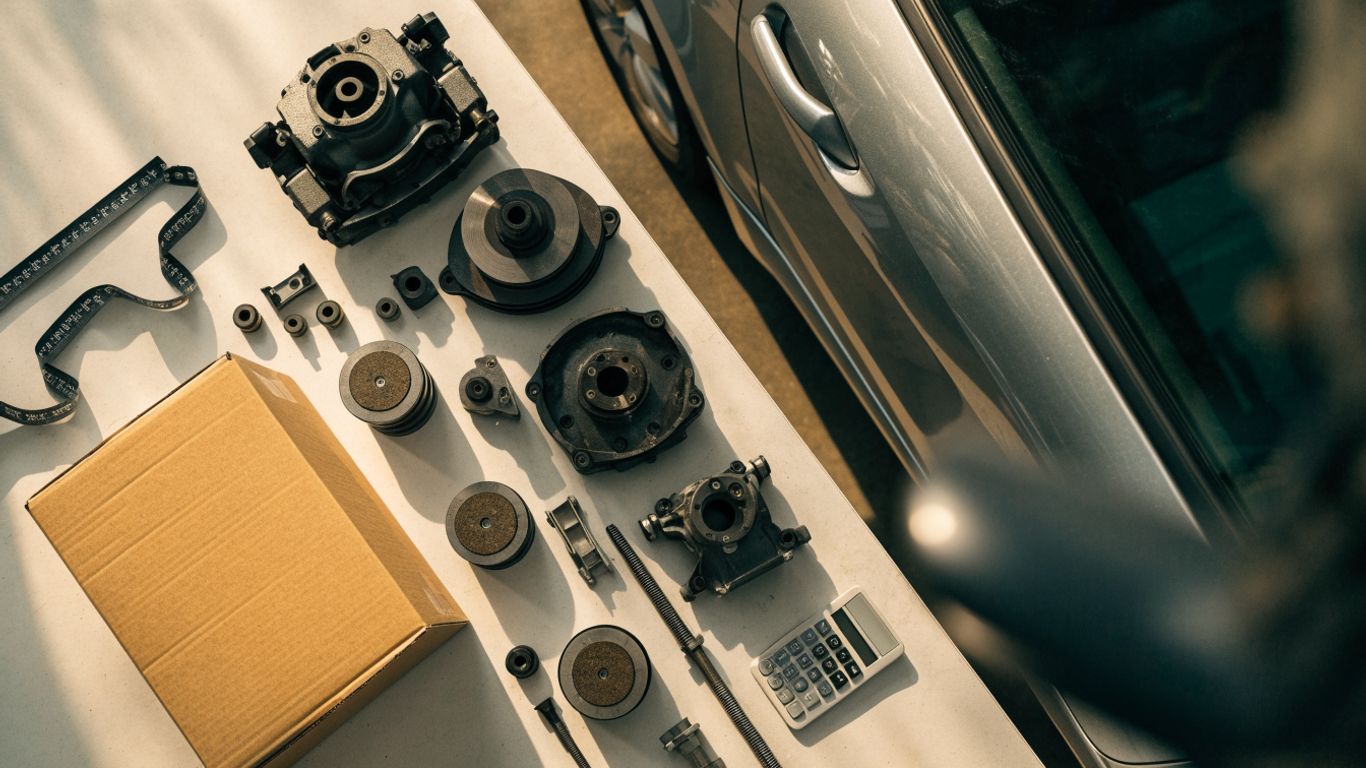
The listed part price is only one part of the buying decision. Add any shipping, handling, payment, or other stated charges, then consider what a return would cost if the part does not fit. This gives you a more useful comparison than a headline price alone. A careful total-cost check can keep a free-shipping offer in perspective.
Add shipping and handling to the item price
Use the checkout total as your practical comparison point, not a product-page price viewed in isolation. Include any delivery or handling charges that appear after entering your address. If the seller offers more than one delivery method, compare the price and estimated timing for each one.
It can help to write down the item cost, delivery cost, and any other stated fees for each suitable listing. This makes it easier to see whether “free shipping” changes the real total or simply applies under conditions you do not meet.
Compare equivalent parts across sellers
A fair price comparison requires parts that are genuinely comparable. Check the maker, part number, stated vehicle application, included components, and warranty terms before comparing totals. A lower price is not a like-for-like saving if the listing covers a different vehicle version or includes fewer items.
Once the details match, compare the delivered price and the seller’s return terms. That broader view helps you weigh cost against clarity and support without assuming that one label or price tells the whole story.
Check return costs and restocking fees
Read the returns policy before purchase, especially if fitment is not fully certain. Check the time allowed for returns, whether the item must be unused and in its original packaging, and who pays return shipping. Look for any restocking fee or other conditions that could affect a refund.
These terms matter even when a seller provides a fitment check. Keep a copy of the policy as it appeared when you ordered, and contact the seller promptly if the item arrives wrong or damaged.
Consider bundles for routine repairs
A bundle can be convenient when it includes multiple items you already need for the same repair. Compare its contents with the individual parts you would otherwise buy, and confirm that every item suits your vehicle. A bundle is not automatically better value if it includes components you will not use.
Check whether the shipping terms apply to the bundle and whether the items ship together. The best choice is the one that matches the repair plan and offers a clear total cost, not simply the largest package.
Assess the seller and part quality
Good product information makes it easier to decide whether a listing is worth considering. Look for details that answer practical questions about the part, its application, and what is included. Then review the seller’s policies and contact options before placing an order. Clear information helps you make a more confident choice without treating a label as proof of quality.
Look for clear product specifications
A useful listing should identify the part and provide relevant specifications, vehicle compatibility, and any limitations. Check whether the product is new or used, what components are included, and whether the photographs show the actual item or a representative example. If a key detail is absent, ask the seller rather than filling in the gap yourself.
Compare specifications with the part you need and the vehicle information you gathered earlier. The description should be consistent across the product page, fitment notes, and checkout details; raise any mismatch before ordering.
Review warranty and returns policies
Read the warranty information for its duration, coverage, and any conditions that apply. Also check how the seller handles returns, exchanges, and parts that arrive damaged or do not match the listing. A policy is more useful when it explains the process and gives you a way to contact the seller.
Keep the order confirmation and a copy of the relevant terms. If the warranty or return wording is vague, ask for clarification before purchase so you know what support is available.
Check seller contact details and customer feedback
Make sure the seller provides a practical contact method, such as an email address or phone number, and explains how to ask about fitment or an order. Customer feedback can offer context about communication, packaging, and delivery, but treat individual reviews as experiences rather than guarantees of what will happen with your order.
Look for patterns across feedback rather than relying on one especially positive or negative comment. If you cannot find clear seller details or get a straightforward answer to a basic question, consider whether you are comfortable proceeding.
Ask about certification or quality standards
If a particular quality standard or certification matters for the part, ask the seller what applies to that specific item and whether they can provide supporting information. Do not assume that a broad claim about a product range covers every component in it. The answer should identify the standard or documentation clearly enough for you to assess it.
For a safety-critical or technically complex component, seek advice from a qualified professional if you are unsure what evidence or specification is appropriate. A seller’s description can inform your decision, but it should not replace the assessment your repair requires.
Place your order with fewer surprises
Once you have checked fitment, delivery, price, and the seller’s terms, take a final look through the order before paying. Make sure the selected item is the one you researched, and that the shipping offer still applies to your address. Save the details that could help if you need to follow up. A clear record makes the next steps simpler if anything needs attention.
Confirm fitment and delivery details at checkout
Review the vehicle details and part description one more time before submitting the order. Check the delivery address, selected shipping method, final total, and any delivery instructions. If the checkout summary differs from the product page or an earlier fitment response, pause and confirm which information is correct.
Do not rely on a free-shipping message alone; verify that the order total shows the expected delivery charge for your address. Resolving an inconsistency now is simpler than trying to change a submitted order.
Keep order confirmations and tracking information
Save the confirmation email, invoice, product listing, and any messages about fitment or shipping. If tracking is provided, keep the link or number and check it for updates. These records can help you follow the delivery and explain the issue if the parcel is delayed or the wrong item arrives.
If you do not receive a confirmation or the expected dispatch information, contact the seller using the details on the order. Keep communications together so you can refer to the same facts if you need further assistance.
Inspect the part before installation
When the parcel arrives, check the packaging and part for visible damage, and compare the item with the listing and order confirmation. Confirm that the identifying details and included components appear to match what you purchased. Take photographs if something looks wrong, and keep the packaging until you are satisfied.
Avoid installing a part if it appears damaged, incomplete, or inconsistent with the order. Contact the seller first and ask how to proceed, especially where installation could affect your return options.
Contact the seller promptly if the part is incorrect or damaged
If the item is not what you ordered, contact the seller as soon as practical and include your order number, a concise description, and clear photographs where helpful. Explain whether the issue is damage, a missing component, or a possible fitment mismatch. Ask what they need from you and how they will handle the next step.
Keep the conversation and any return instructions in writing. Prompt, clear communication gives the seller useful information and helps you follow the stated process without making assumptions about refunds or replacement timing.
Conclusion
Finding a suitable Toyota aftermarket part with free shipping is a matter of checking the details, not just spotting a low price or delivery offer. Confirm the application, read the shipping conditions, compare the full cost, and keep a record of the order. Those simple steps make it easier to buy with confidence and address problems if they arise.