

Key Takeaways
A used Land Cruiser differential can be a sensible repair when its identity, condition, and history are properly verified.
- Match the differential by model, year, axle position, spline pattern, and gear ratio.
- Ask for part numbers, casting details, mileage, removal date, and inspection evidence.
- Compare used, rebuilt, and new genuine parts by total installed cost and expected service life.
- Inspect the housing, gears, bearings, seals, and axles before agreeing to buy.
- Confirm warranty terms, installation requirements, break-in procedures, and return conditions in writing.
Understanding Toyota Land Cruiser differentials
A differential is easy to overlook until noise, leaks, or drivetrain vibration make its condition impossible to ignore. The correct replacement depends on far more than the vehicle badge. Axle position, drivetrain configuration, production year, gear ratio, and physical mounting details all matter. Understanding those basics makes the search for used Toyota Land Cruiser differentials Ballarat – genuine parts only far less uncertain.
What a differential does in the drivetrain
The differential transfers torque to the driven wheels while allowing them to rotate at different speeds during a turn. That difference prevents tyre scrub and reduces stress through the axle and transmission. Inside the housing, ring and pinion gears change the direction of drive and multiply torque before it reaches the axles. Wear in those components can produce a whine that changes with acceleration, deceleration, or road speed.
A differential may still move a vehicle even when its bearings or gear teeth are deteriorating. That is why a short test drive alone does not establish that a used unit is healthy. Oil condition, backlash, contact pattern, and end play deserve attention during a proper inspection.
Front, rear, and center differential differences
Front and rear differentials sit at the axles and send torque to the wheels on either side. A center differential, where fitted, manages the speed difference between front and rear axles in a four-wheel-drive system. These units may look similar in photographs, yet their housings, outputs, ratios, and mounting points can be completely different.
The axle position should therefore be treated as a primary identification detail, not a minor note in an advertisement. A seller who cannot state whether a unit is front, rear, or center is not providing enough information to confirm fitment.
Common Toyota Land Cruiser differential types
Land Cruiser differentials vary across generations, engines, body styles, transmission combinations, and four-wheel-drive systems. Some assemblies are supplied as complete third members, while others are discussed as housings, carriers, or axle assemblies. Locking equipment and limited-slip components can also alter the internal specification.
Before searching, write down the vehicle generation, build information, axle location, transmission, and any factory differential equipment. That simple record helps prevent a visually similar but mechanically unsuitable assembly from entering the comparison.
Why exact model and year compatibility matters
A model name covers many variations over a long production run. Even two vehicles that share a body style may use different ratios, spline counts, flange patterns, or mounting arrangements. Small differences can make installation impossible or create an unsafe mismatch between axles.
Use the vehicle identification number and original component details as the starting point. Exact identification saves money because it reduces freight surprises, rejected returns, and labour spent preparing a part that cannot be installed.
When a used differential is the right choice
A used differential is not automatically a compromise, and a new part is not automatically the best financial decision. The right choice depends on the failure, the condition of the replacement, and how long the vehicle is expected to remain in service. A careful comparison should include labour, fluids, seals, freight, and the consequences of an incorrect fit. Price on its own is too narrow a measure.
Comparing used, rebuilt, and new genuine parts
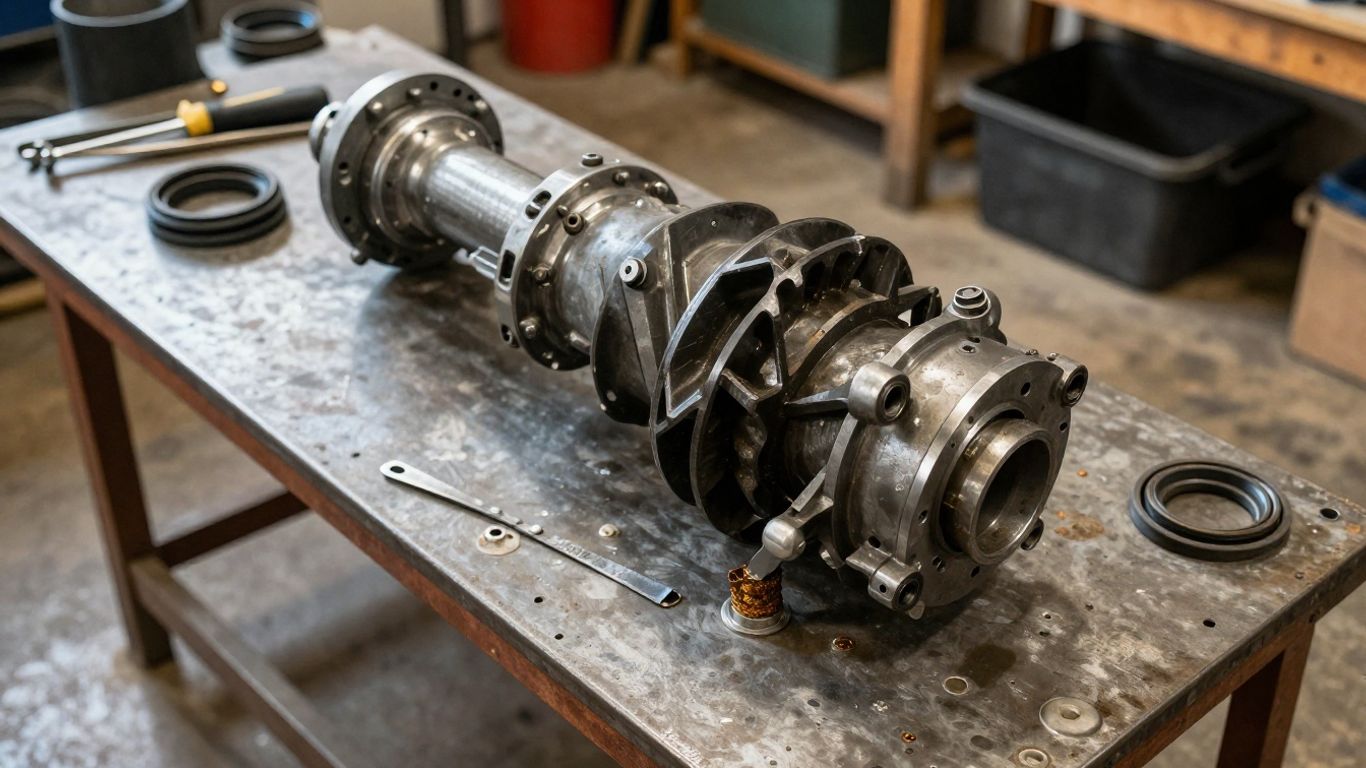
A used unit may retain its original matched gears and be suitable when inspection evidence is strong. A rebuilt differential generally involves disassembly, cleaning, replacement of selected wear items, and setup checks, although the exact work varies by supplier. A new genuine assembly usually carries the highest purchase price and may be difficult to source for an older vehicle.
Ask what is actually included in each option. A complete assembly with known mileage may compare differently from a bare housing, while a rebuilt unit with documented work may justify a higher price than an untested dismantled part.
Evaluating cost against expected service life
Estimate the full installed cost rather than comparing advertisements line by line. Include seals, oil, gaskets, transport, workshop time, and any setup work. Then consider whether the vehicle is used for daily commuting, towing, touring, or occasional trips, since failure consequences vary considerably.
A lower-cost unit can be poor value if its history is unknown and installation has to be repeated. Conversely, a sound used differential with clear provenance may be practical for an older vehicle whose market value does not support a new replacement.
Situations where replacement is better than repair
Repair may be worthwhile when the housing is sound and the damage is limited to accessible seals or bearings. Replacement becomes more attractive when the gears have severe pitting, the carrier is damaged, the housing is distorted, or the required parts and setup time approach the price of a verified assembly.
The decision should be made after disassembly or a competent inspection, not solely from a noise description. Ask the technician whether the original unit can be set up reliably and whether replacement offers a clearer path to dependable use.
Risks of choosing an unverified aftermarket differential
An unverified aftermarket unit may have unclear metallurgy, incorrect dimensions, an incompatible ratio, or a mixture of parts from different assemblies. The concern is not simply the label; it is the absence of traceable specifications and accountable return terms. A part that fits physically may still behave incorrectly in the drivetrain.
A differential should be judged by traceable identity and condition, not by appearance alone.
That principle is especially useful when a listing uses broad compatibility language. Require specific numbers and measurements before treating an unfamiliar assembly as a genuine-parts alternative.
How to identify genuine Toyota parts
Genuine identification starts with evidence that can be checked against the vehicle and the original component. Packaging alone is not enough, particularly when a used assembly has changed hands several times. Part numbers, markings, ratios, and casting details should tell one consistent story. If they do not, pause the purchase until the discrepancy is explained.
Checking Toyota part numbers and markings
Look for stamped or cast numbers on the housing, carrier, identification plate, or associated components. Photograph the markings rather than relying on a seller’s transcription, since a single digit can alter the result. Compare the number with reliable parts information or ask a qualified Toyota parts specialist to confirm its meaning.
A genuine Toyota part number does not prove that the particular unit is right for every Land Cruiser. It does, however, provide a useful starting point for tracing the assembly and checking whether its description matches the advertised position and specification.
Matching the differential to the vehicle identification number
The vehicle identification number links the replacement search to the exact build rather than a broad model family. Provide it to the seller or workshop together with the original axle position and any available photographs. This is more dependable than saying the part is for a particular year range.
Keep the response in writing. If a seller confirms compatibility from the VIN, retain that message with the invoice and listing details in case the delivered assembly differs from what was discussed.
Reviewing casting numbers, gear ratios, and specifications
Casting numbers can help identify a housing, but they are only one part of the check. Confirm the ring-and-pinion ratio, axle spline arrangement, flange or yoke style, carrier type, and locking equipment where relevant. The specification should agree with both the vehicle record and the physical assembly.
Record the information in a simple comparison table before choosing between listings. It can expose a mismatch that is easy to miss when each advertisement uses different terminology.
| Check | What to compare | Why it matters |
|---|---|---|
| Identification | Part and casting numbers | Links the unit to a traceable specification |
| Ratio | Ring-and-pinion gearing | Prevents drivetrain mismatch |
| Axle details | Splines, flanges, and outputs | Confirms physical connection |
| Condition | Wear, leaks, and damage | Indicates likely service life |
After the table is complete, ask the seller to confirm any blank field rather than making an assumption. A missing detail is a reason for another question, not an invitation to guess.
Distinguishing genuine parts from replicas or mixed assemblies
A mixed assembly can contain a genuine housing combined with non-matching internal components. Look for inconsistent finishes, fasteners, markings, wear patterns, or ratio information. None of these signs is conclusive by itself, but several inconsistencies deserve a detailed explanation.
Request the unit’s source vehicle, removal photographs, and any workshop notes. Genuine identification is strongest when the numbers, history, physical condition, and seller’s description all agree.
Finding used Toyota Land Cruiser differentials in Ballarat
Local searching can make inspection and collection easier, but proximity should not replace verification. Ballarat buyers may find parts through dismantlers, specialist suppliers, workshops, and broader Australian networks that ship into the area. The useful question is not merely who has a differential nearby. It is who can identify the unit accurately and stand behind the description.
Searching local dismantlers and specialist suppliers
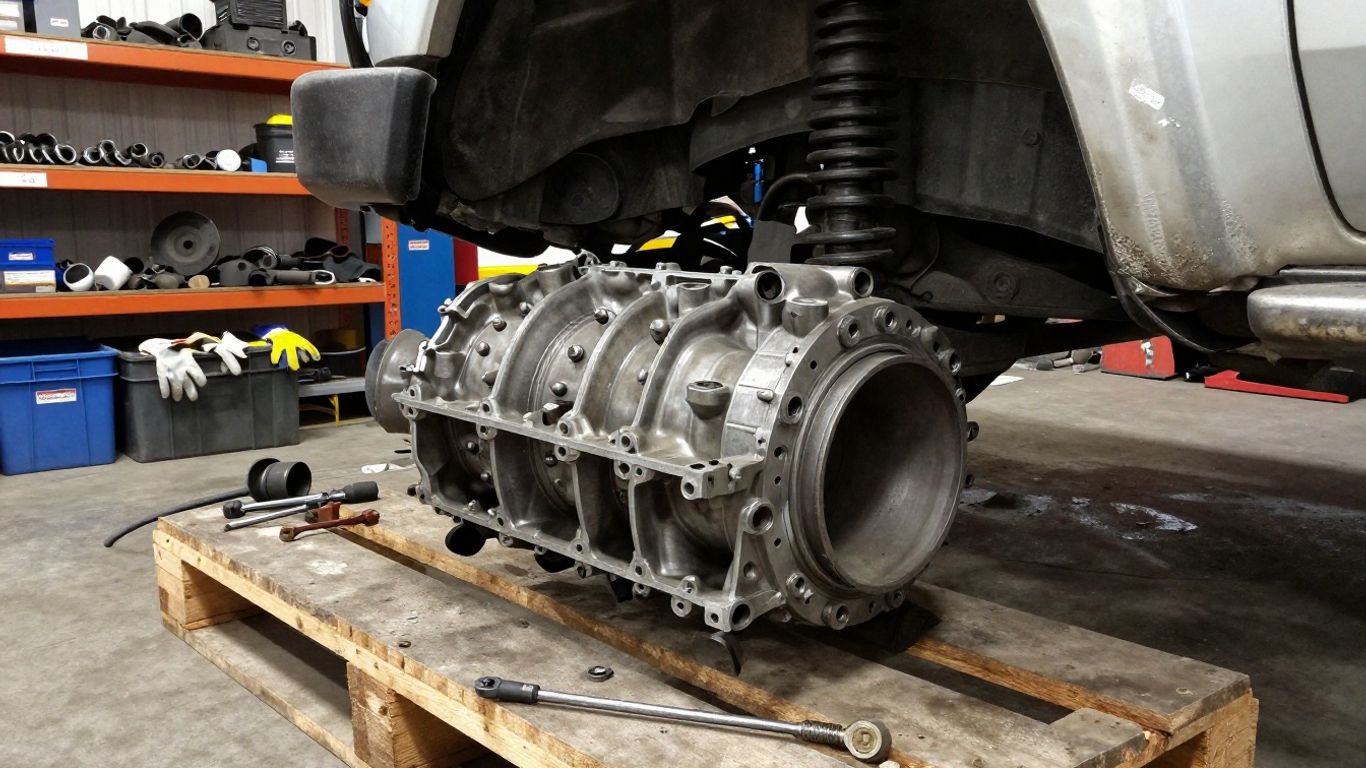
Begin with suppliers that regularly handle four-wheel-drive components and can describe the source vehicle. Search using the exact generation, axle position, ratio, and assembly type rather than only the words “Land Cruiser differential.” A narrow search usually produces fewer irrelevant results and better questions.
Local collection can allow you to inspect the housing before payment, but confirm opening times, loading arrangements, and whether the part is available for viewing. Some sellers store large assemblies off-site, so an appointment may be necessary.
Asking sellers about inventory and sourcing practices
Ask whether the differential was removed from a running vehicle, whether the vehicle’s mileage is known, and when it was removed. Find out if the seller checks backlash, rotates the gears, drains the oil, or photographs internal condition. Their answers reveal how much confidence you can place in the listing.
Also ask whether the part is sold complete and what is excluded. A carrier, axle housing, centre, and complete differential may be described with similar words while requiring very different installation work.
Comparing local pickup with shipped parts
Local pickup reduces the chance of freight damage and lets you verify the identification before taking the unit away. It may also simplify a return if the supplier is nearby. Shipping can widen the search, though, which matters when a particular ratio or generation is uncommon.
For shipped parts, ask how the assembly will be drained, sealed, supported, and protected. Photograph the packaging when it arrives and inspect the housing before signing off on its condition where the carrier’s process allows it.
Verifying seller experience with Land Cruiser models
Experience should be demonstrated through precise answers, not broad claims. A knowledgeable seller can usually discuss axle position, ratios, spline details, source vehicle information, and common differences between generations. They should also be comfortable providing photographs of markings and mounting points.
You do not need a long sales pitch. Clear documentation and a willingness to check details are more useful than confidence without evidence.
Inspecting a used differential before purchase
Inspection is the point where an attractive listing becomes a defensible purchase or gets rejected. Begin with the housing, then examine the internals as far as practical, and finally reconcile the condition with the claimed history. A clean exterior can hide wear, while surface grime alone does not prove serious damage. Take notes and photographs as you go.
Checking the housing for cracks, corrosion, and damage
Inspect mounting ears, welds, flange faces, drain and fill plugs, breather points, and areas around previous impacts. Look for cracks, deep corrosion, distortion, stripped threads, and evidence that the housing has been dragged or dropped. Light surface oxidation is different from corrosion that has weakened a sealing or mounting surface.
Ask whether the housing has been repaired or straightened. Any repair should be described clearly and assessed by someone familiar with axle housings before the part is installed.
Examining gears, bearings, seals, and axles
Rotate the input and outputs by hand if the assembly allows it, listening for roughness and feeling for excessive play. Inspect gear teeth for pitting, scoring, chipped edges, and an uneven contact pattern. Check seals for hardening or leakage and look for metal in the drained lubricant.
Bearings may require a closer workshop inspection, especially when noise is the reported reason for replacement. Axle splines and flange surfaces should be free from serious wear, because a sound centre cannot compensate for damaged connection points.
Reviewing mileage, vehicle history, and removal date
Mileage gives context but is not a guarantee of condition. A lightly used touring vehicle may have worked harder than a higher-mileage commuter, while towing, water crossings, poor lubrication, and oversized tyres can accelerate wear. Ask for the source vehicle’s history and the reason the differential was removed.
The removal date also matters because seals can age while an assembly sits in storage. Clarify how it was stored, whether it was drained, and whether the seller knows if it was operational immediately before removal.
Requesting clear photos and inspection records
Request sharp photographs of every marking, the housing from several angles, flanges, splines, seals, and any damaged area. If the seller claims the gears were inspected, ask what was checked and when. A vague statement such as “tested good” is less useful than a brief record of rotation, noise, oil condition, and visible wear.
Compare the images with the delivered part. Save the original listing, messages, inspection notes, and invoice so a disagreement can be handled with specific evidence rather than memory.
Confirming fitment and installation requirements
Fitment is confirmed when the replacement matches both the vehicle and the installation plan. The differential may be correct while associated seals, flanges, or mounting hardware are not. Discuss the complete job with the installer before purchase, particularly if the assembly is being shipped from outside Ballarat. This avoids discovering missing parts after the vehicle is already on a hoist.
Matching the differential to the Land Cruiser generation
Start with the exact generation and build details, then confirm the engine, transmission, body configuration, and axle location. Production changes can occur within a generation, so a broad year range is not sufficient evidence. Compare the old and replacement assemblies side by side whenever possible.
The installer should verify mounting points, housing dimensions, output orientation, and connection locations before fitting. These checks are faster and cheaper before fluids are added and the vehicle is reassembled.
Confirming axle, spline, and gear-ratio compatibility
The axle shafts and splines must match the differential carrier and side gears. Input flange or yoke details must also suit the propeller shaft, while the gear ratio must be compatible with the rest of the drivetrain. In four-wheel-drive vehicles, a ratio mismatch can create serious mechanical stress.
Do not rely on a seller’s statement that the unit “looks the same.” Ask for the actual ratio and spline information, and have the workshop compare it with the original specification.
Identifying related seals, fluids, and mounting hardware
A replacement may need new pinion and axle seals, gaskets, correct differential oil, breather components, and replacement fasteners. Some hardware can be reused only if it remains within specification. Ask the installer to identify these items before the job begins.
Using the correct lubricant and sealing method is part of the repair, not an optional finishing detail. The invoice should distinguish the differential itself from consumables and related parts so the total cost remains clear.
Deciding whether professional installation is necessary
Differential installation involves precise bearing preload, backlash, gear-tooth contact, torque settings, and leak checks. Those adjustments are not reliably established by simply bolting in a replacement centre. A workshop with suitable measuring tools can identify problems before they become expensive drivetrain damage.
Professional installation is particularly sensible when the unit’s history is limited or when internal components have been changed. Ask for the setup measurements and any recommended follow-up inspection as part of the quotation.
Protecting your purchase after installation
The work is not finished when the differential is mounted and the vehicle leaves the workshop. Early monitoring can identify a leak, incorrect setup, or incompatible component before damage spreads. Keep the initial driving conservative and pay attention to changes that were not present before the repair. Good records also make future diagnosis much easier.
Understanding warranties and return conditions
Read the warranty before payment, including its duration, exclusions, labour coverage, and requirements for installation. Used parts warranties may depend on professional fitting, correct fluids, or prompt reporting of a fault. Return conditions can also differ when the part has been modified, dismantled, or installed.
Ask who pays freight if the assembly is faulty and what evidence the supplier requires. Written terms are much easier to rely on than an informal promise made during a phone call.
Testing for noise, vibration, and fluid leaks
After installation, check the differential for leaks around seals, covers, plugs, and flange faces. During a careful road test, listen for whining, rumbling, clunks, or changes under acceleration and overrun. Notice whether vibration varies with vehicle speed or throttle position, then report it promptly.
A small amount of observation at different speeds is more useful than one fast drive. Stop testing if the noise is severe, the housing becomes unusually hot, or lubricant is visibly escaping.
Following the correct break-in and maintenance procedures
Follow the installer’s instructions for initial driving, lubricant changes, and inspection intervals. A rebuilt unit may have different bedding-in requirements from an undisturbed used assembly, so do not apply generic advice without checking the supplier or workshop’s directions.
Keep the breather clear and inspect the oil for contamination at the recommended interval. Regular checks are especially worthwhile for vehicles used in water, dust, towing, or remote travel.
Keeping records for future repairs or resale
Store the invoice, part numbers, ratio information, source vehicle details, photographs, warranty terms, and installation measurements together. Add the installation date, odometer reading, lubricant used, and any follow-up work. These details provide a useful starting point if a noise or leak appears later.
The same file can support future resale by showing what was replaced and why. It also prevents the next repairer from having to repeat identification work that has already been completed.
Conclusion
Finding a genuine used Toyota Land Cruiser differential in Ballarat is mainly an exercise in careful verification. Match the unit to the vehicle, inspect its condition, check the seller’s evidence, confirm the installation details, and protect the transaction with clear written terms. That process takes more time than choosing the cheapest listing, but it gives the replacement a far better chance of fitting correctly and delivering dependable service.