

Key Takeaways
Buying cheap Toyota Hilux parts on the Sunshine Coast can work well when you confirm compatibility, inspect the part carefully, and account for fitting and transport costs.
- Identify the Hilux generation, engine, transmission, and trim before shopping.
- Compare genuine, used, reconditioned, and aftermarket parts on total cost.
- Inspect used parts for corrosion, cracks, leaks, wear, and previous damage.
- Confirm the seller’s warranty, return terms, and cash-and-carry conditions.
- Use professional checks for safety-critical, structural, and emissions-related parts.
Understanding the cash-and-carry parts market on the Sunshine Coast
Cash-and-carry buying is straightforward: you find the part locally, pay for it, and take it away rather than arranging a long delivery or workshop supply order. On the Sunshine Coast, that can mean comparing wreckers, recyclers, dealers, online listings, and independent parts suppliers in one trip. The cheapest sticker price is not always the cheapest completed repair, so think about condition, compatibility, removal, fitting, and transport together.
What cash and carry means for Hilux owners
For a Hilux owner, cash and carry usually means the part is available now and sold for collection. Some sellers remove parts before you arrive, while others expect you to bring tools and take components off a donor vehicle yourself. Ask what is included, whether bolts or brackets come with the part, and whether the price changes if the seller has already done the removal.
A local purchase also lets you inspect the item before handing over money. That is particularly useful for panels, lights, wheels, seats, mirrors, and trim, where photographs can hide scratches or mismatched fittings. Availability is only half the saving; avoiding a wrong part and a second trip matters just as much.
New, used, reconditioned, and aftermarket options
New genuine parts are generally the simplest match, but they may cost more than a used equivalent. Toyota Genuine Parts and accessories are described as being specifically designed for Toyota vehicles, which can make them a sensible choice when fit and original specification matter. Used parts can offer strong value for older Hiluxes, while reconditioned items sit between new and used depending on the work completed.
Aftermarket parts vary considerably. Check the manufacturer, materials, included hardware, and any applicable warranty rather than treating every replacement as equivalent. For a cosmetic component, a clean used part may be perfectly practical; for a mechanical or safety-related component, documented condition and professional advice deserve more weight.
When local wreckers offer better value
Wreckers can be a good option when the Hilux is older, the required component is no longer readily stocked, or an entire assembly is available at a useful price. A used door, tailgate, mirror, console, or suspension component may cost much less than a new replacement. Local collection also avoids freight damage and gives you a chance to compare colour, condition, and mounting points.
The best value depends on how much preparation is needed after purchase. A faded panel may need painting, a used lamp may need polishing, and a removed engine may need seals or accessories before installation. Ask for the donor vehicle details where available and record exactly what the quoted price includes.
Parts commonly available for cash purchase
Cash-and-carry stock commonly includes body panels, doors, tailgates, bonnets, mirrors, lights, wheels, seats, interior trim, radiators, cooling components, suspension parts, and selected engine or transmission assemblies. Availability changes quickly, so calling ahead with the exact model information is worthwhile. Bring photographs of the damaged item if you are unsure of its name.
Large assemblies need more careful planning than small trim pieces. A seller may have the right engine family but not the matching wiring, sensors, computer, or accessories. Treat a bare component and a complete ready-to-fit assembly as different purchases, even when they came from the same donor vehicle.
Finding the right Toyota Hilux part
Hilux parts can look almost identical across nearby model years while using different connectors, brackets, or mounting points. Start with the vehicle identity, then confirm the mechanical and trim details before comparing prices. A few minutes spent checking the original part can prevent an expensive return or an unusable bargain.
Identifying the Hilux generation and model year
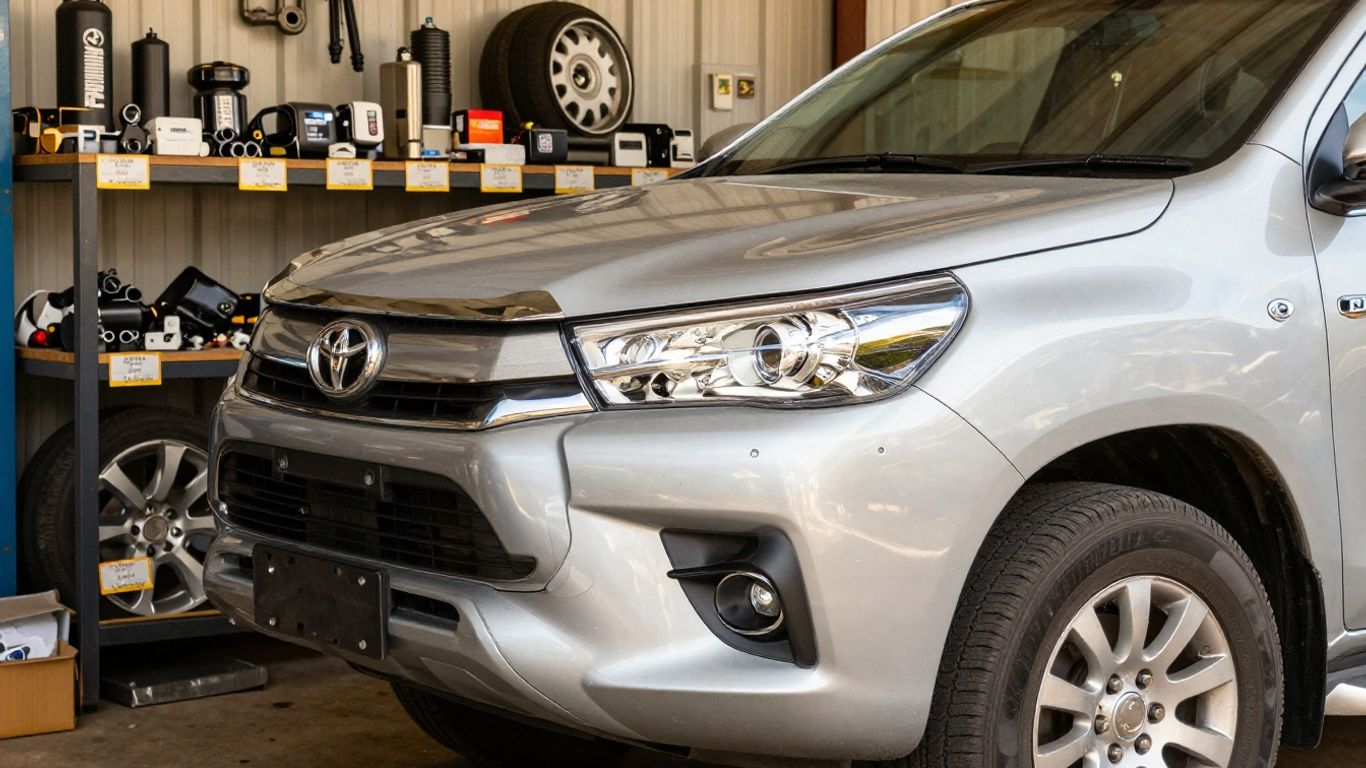
Begin with the build plate, registration information, service records, and the vehicle identification number. Note whether the vehicle is a single cab, extra cab, or dual cab, and record the model year rather than relying only on its appearance. Facelifts and option changes can affect lights, grilles, bumpers, dashboards, and electrical components.
Photographs help when contacting a seller, but they should support—not replace—the vehicle details. Send a clear image of the original part, its mounting area, and any visible label or casting number. If the Hilux has been modified, mention those changes before the seller confirms a match.
Checking engine, transmission, and trim compatibility
Engine size alone is not enough for a drivetrain purchase. Check the engine code, transmission type, drive configuration, wiring, sensors, transfer case arrangement, and included accessories. A component from a similar Hilux may require different programming or supporting parts even if the main housing looks correct.
Trim compatibility matters for body and interior parts as well. Cab style, seat configuration, side-airbag equipment, audio fittings, and factory options can change the correct part. Ask whether the quoted item is a complete assembly or a shell that needs parts transferred from your vehicle.
Using VINs, part numbers, and registration details
Give the seller the VIN whenever possible, along with the registration details and the original part number. Part numbers provide a useful reference, but superseded numbers and market variations mean they should still be checked against the vehicle. Keep a photo of the label before removing the old part.
If a seller cannot confirm the match, pause rather than guessing. A low price is not useful if the connector, bracket, software, or dimensions differ. Written confirmation of the part description can also make a return discussion clearer if the item does not match the agreed specification.
Matching left-hand and right-hand components
Left-hand and right-hand parts are not interchangeable simply because they share a shape. Headlamps, mirrors, suspension pieces, doors, guards, and some interior components can have side-specific fittings or wiring. Stand in the vehicle facing forward when describing the side, because “driver’s side” can cause confusion across markets.
Compare the rear of the component as carefully as the visible face. Check mounting tabs, plug positions, adjustment mechanisms, drain holes, and reinforcement points. For a painted panel, also compare the colour code and finish rather than assuming two vehicles with the same model badge will match.
Where to buy cheap Hilux parts locally
The Sunshine Coast offers several buying routes, each suited to a different kind of repair. Dealers are useful for confirmed genuine parts, recyclers can provide dismantled used components, and online listings widen the search when local stock is thin. Decide whether you value certainty, price, immediate collection, or the ability to inspect the part most.
Toyota dealers and genuine replacement parts
A Toyota dealer is a sensible starting point when you need a confirmed genuine replacement, a part with a specific vehicle fit, or help interpreting a part number. Toyota Genuine Parts are described as being specifically designed for Toyota vehicles, and local dealer listings may also provide fitting and warranty information subject to conditions. Ask for a written quote that separates the part, labour, and any required programming.
Dealer pricing may be higher than a used component, but the comparison should include the risk of buying the wrong part. Genuine replacement parts can be especially attractive for newer vehicles, unusual assemblies, or repairs where a poor fit could create further work. Check the exact warranty terms before paying.
Sunshine Coast auto recyclers and wreckers
Local auto recyclers and wreckers are often the first place to check for affordable panels, lights, interior pieces, wheels, and used mechanical assemblies. Tell them the full vehicle details and ask whether the part has been tested, removed from a running vehicle, or sold as untested. Condition descriptions are worth clarifying before you drive across the coast.
Ask whether the seller can provide photographs of the actual item rather than a representative image. Confirm collection hours, payment methods, loading assistance, and whether the part can be held for you. A short phone call can save a wasted trip when stock has already sold.
Online listings with local pickup
Online listings can make price comparison easier and may reveal parts from private sellers, dismantlers, and businesses. Search using the model year, engine code, body style, and exact component name. Read the description closely for “damaged,” “untested,” “exchange,” or “pickup only” language.
Before travelling, request the dimensions, part number, side, colour, and clear photographs. Agree on the price and collection arrangement in writing, but inspect the item in person before completing a private purchase where possible. Do not assume a listing remains available just because it is still visible.
Salvage yards and self-service parts locations
Self-service yards can offer low prices and a useful learning opportunity, but they demand more preparation. Wear gloves, eye protection, sturdy footwear, and clothing that can handle dirt or sharp edges. Find out whether the yard supplies jacks, lifting equipment, wheel removal tools, or fluid-draining facilities.
Know the safety rules before starting. Do not work under an unsupported vehicle, and avoid removing parts that are under spring, gas, hydraulic, or stored electrical pressure unless the yard specifically permits it and you understand the procedure. The saving is not worth an avoidable injury.
Inspecting used Hilux parts before you pay
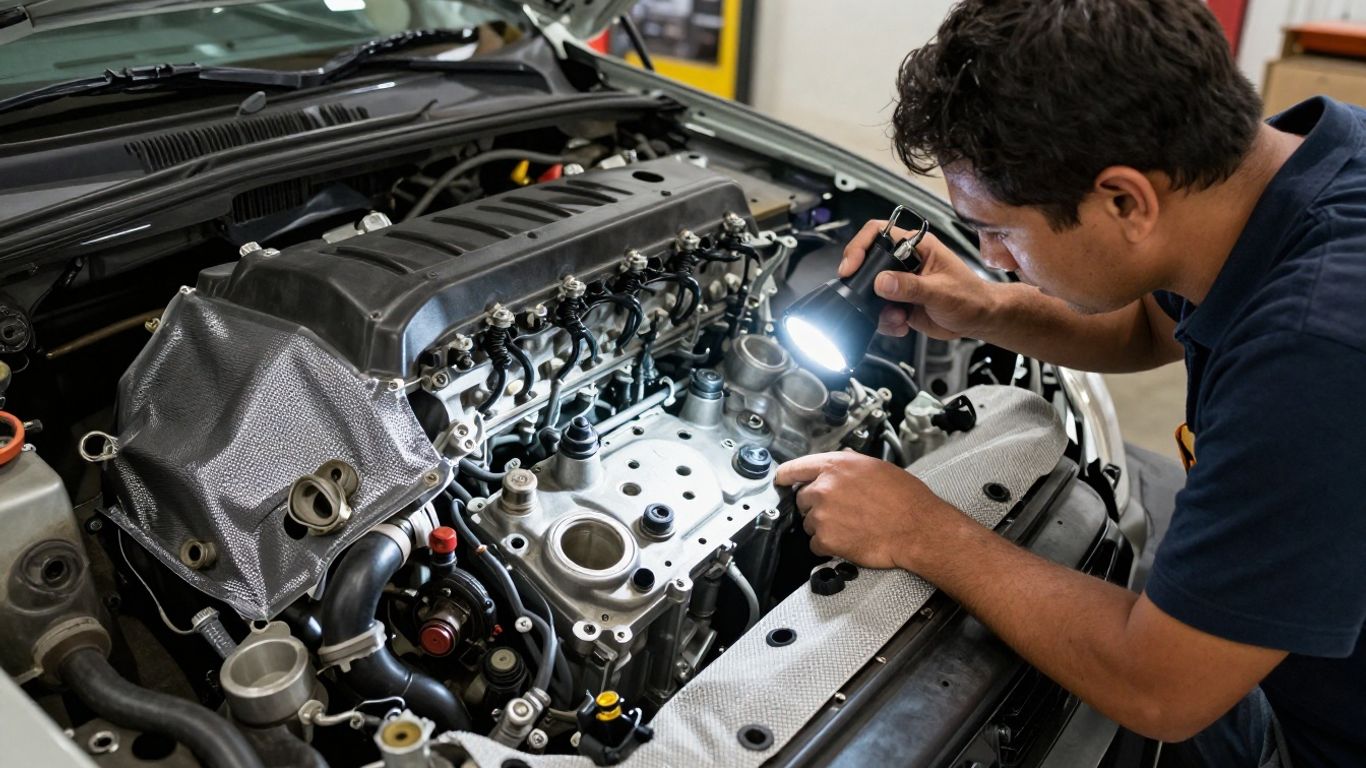
Inspection is where a cheap part either becomes a good purchase or an expensive mistake. Look at the actual component, not just the seller’s description, and compare it with the part already on your Hilux. Take a torch, phone camera, tape measure, and a short list of details you need to verify.
Checking body panels, lights, and exterior trim
Walk around a panel in natural light and look for ripples, filler, paint mismatch, bent edges, and damaged mounting holes. Check doors and tailgates for hinge wear, latch alignment, and water damage. On lights, inspect the lens, housing, adjusters, seals, plugs, and mounting tabs rather than judging condition from the front alone.
Trim pieces should be checked for broken clips, sun damage, warping, and missing fasteners. If the part is painted, confirm the colour code and decide whether minor marks are acceptable after allowing for repainting. A seemingly cheap panel can cost more once preparation and paint are included.
Evaluating engines, transmissions, and driveline components
Large mechanical parts need more evidence than cosmetic items. Ask for the donor vehicle details, approximate kilometres if known, compression or pressure-test information, and what accessories are included. For transmissions and differentials, inspect casing damage, output shafts, seals, mounting points, and signs of overheating or metal contamination.
Do not rely on a clean exterior as proof of internal condition. If a used engine or transmission cannot be tested, price it as an untested unit and discuss the risk with a qualified mechanic. Confirm whether the sale includes a warranty and whether installation requirements or matching electronics are excluded.
Testing electrical and interior parts
Electrical components should be checked for damaged plugs, bent pins, corrosion, cut wiring, and signs of water entry. Where practical, test switches, motors, screens, fans, speakers, and instrument functions before removal. Some modules may require programming or pairing after installation, so ask about that before assuming the item is plug-and-play.
For seats, consoles, dashboards, and trim, inspect rails, hinges, clips, fabric, leather, and airbag-related components. Match the colour and configuration carefully. A complete interior item with intact fittings is usually more useful than a cheaper loose component missing its brackets.
Spotting corrosion, cracks, leaks, and excessive wear
Use the torch to examine seams, drain points, bolt holes, and concealed faces. Surface dirt can hide corrosion, while fresh cleaning may conceal a leak temporarily. Look for cracked plastic, repaired welds, stretched rubber, oval bolt holes, and uneven wear that suggests a larger mechanical problem.
Photograph anything questionable and ask for it to be written on the invoice or receipt. If a defect affects fit, safety, or expected operation, renegotiate or walk away. A seller who is clear about condition is easier to deal with than one who avoids direct answers.
Comparing prices and negotiating a cash-and-carry deal
A fair comparison starts with equivalent parts in equivalent condition. A complete tested assembly should not be compared with a bare, untested unit, and a local collected price should not be compared with an online price that excludes freight. Build a realistic repair total before deciding which offer is cheapest.
Estimating fair prices for common Hilux parts
Prices vary with generation, rarity, condition, mileage, colour, completeness, and demand. Begin with several comparable listings, then adjust for missing hardware, damage, testing, and removal. Keep a note of the seller, date, condition, and collection terms so that a low advertised price does not distort your comparison.
The following framework helps separate the main cost drivers without pretending there is one universal price for every Hilux:
| Part category | Main price drivers | Questions to ask |
|---|---|---|
| Body panels and trim | Colour, damage, completeness | Are clips, hinges, and mouldings included? |
| Lights and electrical parts | Lens condition, testing, compatibility | Has the unit been tested and is the plug intact? |
| Engine and transmission assemblies | Mileage, testing, accessories, warranty | What is included and what evidence supports condition? |
| Wheels and suspension parts | Size, wear, straightness, safety | Are tyres, bushes, or bearings still serviceable? |
This approach gives you a better negotiating position than simply asking for the lowest price. Point to specific defects or missing components, and make a reasonable offer based on the work you will need to complete.
Comparing used parts with aftermarket alternatives
Compare the used item with an aftermarket replacement of the same scope. A used bumper shell is not equivalent to a complete aftermarket bumper with brackets, and an untested alternator is not equivalent to a tested replacement with a written warranty. Include delivery, returns, fitting, and any programming in both totals.
For common wear items, a new aftermarket component may be more predictable. For colour-matched panels or discontinued trim, a clean used genuine item may be more economical. The right choice depends on condition and application, not the label alone.
Asking about warranties, returns, and guarantees
Before paying, ask whether the part is tested, how long any warranty lasts, what it covers, and whether labour is excluded. Confirm whether cash-and-carry purchases can be returned for incorrect identification, or only for a confirmed fault. Private sales may offer fewer protections than established businesses, so keep the listing and messages.
Toyota Genuine Parts purchased through a dealer may have warranty conditions that differ from used or aftermarket stock. Read the actual terms rather than relying on a casual promise. Get the part description, price, date, and any agreed condition recorded on the receipt.
Calculating removal, fitting, and transport costs
A low purchase price can disappear through removal time, specialist tools, workshop labour, towing, freight, or repainting. Estimate each cost before negotiating, especially for engines, gearboxes, doors, windscreens, and suspension assemblies. If the seller offers removal, compare that charge with the time and risk of doing it yourself.
Also allow for consumables and related items such as seals, fluids, clips, fasteners, filters, and alignment work. Total repair cost beats sticker price when two parts appear similar. Use that figure to decide whether cash-and-carry is genuinely worthwhile.
Buying and transporting bulky Hilux parts safely
Bulky parts create practical problems that do not arise with a switch or mirror. Measure the component, plan how it will be lifted, and make sure your vehicle can carry it securely. Ask the seller about loading equipment before arriving rather than improvising in the car park.
Preparing measurements and vehicle details
Measure the available cargo length, width, height, and opening dimensions of your transport vehicle. Remember that an engine, door, bonnet, or axle may need to enter at an angle. Protect the cabin and load space with blankets, plastic sheeting, timber blocks, and straps that are rated for the job.
Take the Hilux details with you even when collecting a large part. The correct mounting points, cab style, and generation still matter, and a bulky wrong part is harder to return. Confirm the pickup address, loading time, and whether assistance is available.
Bringing the right tools and protective equipment
For self-removal, bring suitable sockets, extensions, breaker bars, screwdrivers, pliers, penetrating fluid, trim tools, gloves, eye protection, and a torch. Add containers for bolts and labels for connectors so parts can be identified later. Never bring tools that you are not confident using around stored energy, fuel, coolant, or pressurised systems.
Wear sturdy footwear and avoid loose clothing. If fluids may remain in the component, carry absorbent material and sealed containers according to the yard’s rules. Good preparation protects both you and the part from rushed or damaging removal.
Loading engines, panels, wheels, and suspension parts
Use an engine crane, trolley, ramps, or lifting equipment designed for the load rather than trying to lift heavy assemblies by hand. Keep panels upright where practical, pad painted surfaces, and separate wheels so they cannot roll or strike one another. Strap everything to solid anchor points and check the load again after a short drive.
A part is not safely purchased until it can be moved without injuring someone or damaging the vehicle.
That principle is especially useful for engines, gearboxes, axles, and suspension components. If the load shifts, stop in a safe place and correct it; do not rely on a loose cover or a single improvised rope.
Confirming roadworthiness and installation requirements
Some parts can be transported easily but should not be fitted without inspection or adjustment. Suspension, steering, braking, lighting, restraint, and structural components may require specialist installation and post-installation checks. A used part that appears sound still needs to meet the vehicle’s requirements once fitted.
Ask whether wheel alignment, brake bleeding, coding, calibration, fluid replacement, or a roadworthiness inspection will be needed. Plan those costs before purchase. Safe installation is part of the bargain, not an optional extra after collection.
Avoiding problems with cheap Toyota Hilux parts
Low-cost parts are not automatically poor quality, but rushed buying creates predictable problems. The most serious errors involve incompatible components, hidden damage, unsafe installation, or a part that affects registration and emissions compliance. Slow down when the component has consequences beyond appearance.
Parts that should not be bought without professional checks
Used engines, transmissions, differentials, steering assemblies, suspension components, and electronic control modules deserve professional input when their condition or compatibility is uncertain. A mechanic can often identify missing accessories, mounting differences, leaks, or diagnostic issues before the part is installed.
Get advice before buying if the seller cannot explain the donor vehicle, test results, included components, or warranty terms. For complex assemblies, a cheap purchase with no evidence may be closer to a gamble than a repair strategy.
Safety-critical components that need extra caution
Braking, steering, suspension, seat-belt, airbag, wheel, tyre, and structural parts need particular care. Do not install visibly cracked, bent, corroded, modified, or unknown-condition components simply because they are inexpensive. Use qualified inspection and fitting where the part can affect control or occupant protection.
Lights and mirrors also affect visibility and safe operation. Check beam condition, adjusters, housings, and secure mounting. If a component has been involved in a collision, ask whether hidden deformation could affect its performance.
Verifying emissions and registration compliance
Before buying an engine, exhaust component, catalytic component, intake part, or electronic module, confirm that it is suitable for the vehicle’s emissions equipment and local registration requirements. Changes in sensors, software, exhaust routing, and engine configuration can create warning lights or compliance problems.
Keep records of the part source, identification numbers, and installation work. If the Hilux is subject to an inspection, ask the mechanic or relevant authority what documentation may be required. A part that fits physically may still be unsuitable for lawful road use.
Knowing when genuine parts are worth the extra cost
Genuine parts can be worth paying more for when fit, software compatibility, durability, warranty conditions, or safety are central to the repair. Toyota Genuine Parts are described as being specifically designed for Toyota vehicles, which is relevant when an exact replacement matters more than the lowest initial price. That does not make every used or aftermarket option unsuitable; it means the comparison should be based on the complete risk and cost.
For simple trim, brackets, or non-critical cosmetic repairs, a carefully inspected used part may be the sensible choice. For newer vehicles, unusual electronics, or safety-related assemblies, the extra certainty of the correct genuine component may justify the difference.
Conclusion
Buying cheap Toyota Hilux parts Sunshine Coast – cash & carry can be a practical way to control repair costs when you verify the vehicle details, inspect the actual component, compare the complete installed price, and use professional help for safety-critical or complex parts. A careful buyer does not chase the lowest number alone; they choose the part that fits, performs, and remains economical after collection and installation.