

Key Takeaways
A dependable replacement starts with exact compatibility checks, clear mileage evidence, and a written warranty. The installation plan matters just as much as the engine purchase.
- Match the engine to the Toyota model, year, trim, drivetrain, and engine code.
- Treat low mileage as a claim that should be supported by records.
- Compare the complete replacement cost, not only the advertised engine price.
- Ask about testing, warranty exclusions, delivery, returns, and installation requirements.
- Keep detailed records from purchase through break-in and scheduled maintenance.
Why choose used Toyota engines in Rockingham
Replacing an engine is a major repair, but it does not always require replacing the vehicle. For Rockingham drivers, a carefully selected used Toyota engine can offer a practical middle ground between an expensive new assembly and an uncertain repair. The phrase low mileage guaranteed should lead to specific questions about documentation, testing, and warranty terms rather than a quick assumption about condition.
Common reasons to replace a Toyota engine
A Toyota engine may need replacement after severe overheating, low compression, oil starvation, collision damage, or a failure that makes rebuilding uneconomical. Sometimes the surrounding vehicle is still structurally sound and has a service history worth preserving. A technician should confirm that the engine is the true source of the problem before a replacement is ordered, since wiring, sensors, cooling systems, and transmissions can create similar symptoms.
The diagnosis should also identify why the original engine failed. Installing another engine without correcting a blocked radiator, failed oil cooler, or neglected timing component can simply repeat the breakdown. A written diagnostic summary gives the owner and installer a shared starting point.
Benefits of choosing a low-mileage replacement
Lower mileage may mean less accumulated wear on cylinder walls, bearings, valve-train parts, and accessory mounting points, although mileage alone is never a full condition report. A suitable used engine can preserve the vehicle’s familiar configuration while reducing the time and complexity associated with a custom rebuild. It may also make the repair easier to budget when the supplier states exactly what is included.
The useful question is not merely how low the odometer reading sounds. Ask how the mileage was recorded, whether the engine was tested, and which parts remain attached. A written guarantee should explain the remedy if the mileage or condition does not match the agreed description.
Used engines versus rebuilt and remanufactured options
A used engine is generally sourced from another vehicle and sold in its existing configuration, subject to inspection and any stated testing. A rebuilt engine has selected components repaired or replaced, while a remanufactured unit is typically restored to a defined specification through a more extensive process. The labels can vary by supplier, so the buyer should request a component and testing description instead of relying on terminology alone.
The best choice depends on budget, availability, vehicle value, and the desired warranty. A used unit may suit an older vehicle when compatibility is straightforward, while a rebuilt or remanufactured option may make sense when a particular specification is difficult to source. Compare coverage and installation requirements on equal terms.
Toyota models commonly supported by used engines
Used engines may be available for many Toyota cars, trucks, vans, and SUVs, but availability changes with year, trim, drivetrain, and engine code. Common model names are only a starting point; two vehicles carrying the same badge can use different control systems or mounting arrangements. Confirm the exact vehicle details before treating a listing as a match.
A supplier should be able to discuss the model information needed to identify a candidate engine. If the listing lacks a precise year range, engine code, or part reference, pause the purchase and obtain that information first.
How to verify engine compatibility
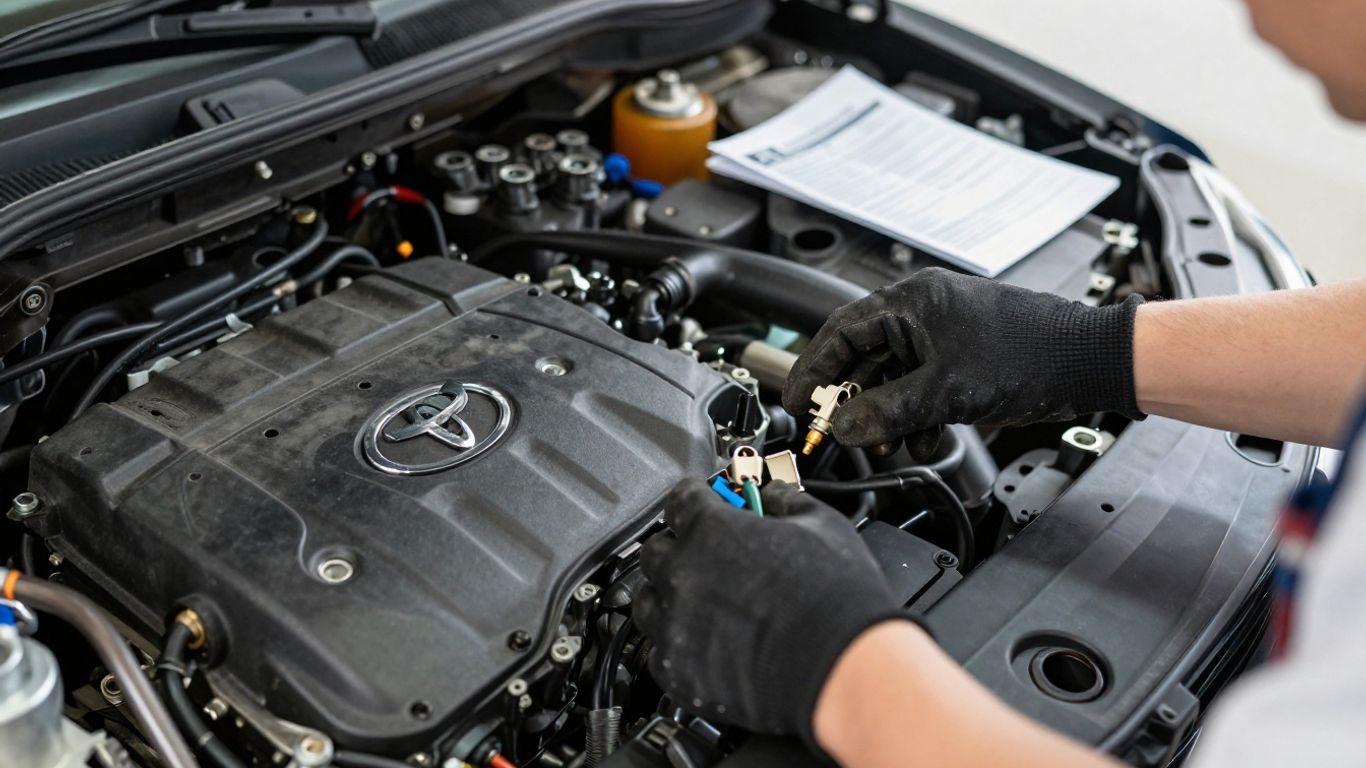
Compatibility is more detailed than matching a Toyota badge to a replacement listing. The engine must physically fit, communicate with the vehicle, and meet the relevant emissions and drivetrain requirements. Gather the VIN, current engine code, transmission type, drive configuration, and trim details before requesting a quote.
Match the Toyota model, year, and trim
Start with the vehicle’s model, production year, trim level, and body style. Factory changes can occur within a model generation, and a higher or lower trim may use different accessories, sensors, or programming. The registration record is useful, but the VIN and original engine identification provide stronger confirmation.
Share photographs of the engine bay when practical, especially if the vehicle has been modified. This helps reveal non-factory accessories or previous repairs that could affect installation.
Check the engine code and drivetrain configuration
The engine code identifies the family and specification more precisely than a model name. Front-wheel drive, all-wheel drive, and four-wheel drive versions may differ in mounts, oil pans, exhaust routing, or control hardware. Transmission pairing also deserves attention because a compatible long block may still require original external components.
Ask whether the quoted unit is a complete engine, a long block, or an assembly with accessories attached. That distinction prevents an apparently correct listing from becoming an unexpected parts transfer project.
Compare VIN and part numbers
The VIN can help confirm the vehicle’s factory configuration, while part numbers can narrow down the correct replacement assembly and related components. Compare numbers from the original engine, supplier documentation, and, where appropriate, manufacturer service information. Do not assume that a visually similar casting is interchangeable.
A supplier’s written confirmation should identify the numbers used for the match. Keep that message with the invoice, since it records the basis on which compatibility was represented.
Confirm emissions and computer compatibility
Emissions equipment and engine computers can vary by model year and market. Sensors, wiring connectors, throttle systems, and calibration requirements may prevent a direct installation even when the block appears identical. Ask which original components will be reused and whether programming, relearning, or diagnostic work is expected after installation.
The installer should also verify local inspection requirements before the engine is fitted. Resolving those questions early is less expensive than discovering a mismatch after the vehicle is apart.
What a low-mileage guarantee should include
A low-mileage promise has value only when its terms can be understood and checked. The paperwork should identify the engine, stated mileage, documentation supporting that mileage, warranty period, and remedy available if the claim proves inaccurate. It should also distinguish a mileage representation from a general parts or replacement warranty.
Defining acceptable mileage documentation
Useful documentation may include a donor vehicle record, auction or salvage information, service entries, inspection records, and photographs connected to an identifiable vehicle. No single document proves every detail, but several consistent records create a more credible history. Ask whether the stated mileage is actual, estimated, or based on an available vehicle reading.
Have the mileage description placed on the quote or invoice rather than leaving it in an informal conversation. Clear wording reduces disagreement later.
Reviewing service, salvage, and ownership records
Records can reveal whether the donor vehicle was involved in a collision, exposed to flooding, or maintained regularly. Salvage documentation may explain why an engine became available without implying that the engine itself suffered internal damage. Ownership and service records can also help establish how the mileage was accumulated.
Review the records for inconsistencies in dates, vehicle identification, and mileage. A missing history does not automatically condemn an engine, but it should affect the questions you ask and the risk you are willing to accept.
Understanding testing and inspection standards
Ask what testing was completed, when it occurred, and whether the results are recorded. Compression, leak-down, oil-pressure, cooling-system, or operational checks may each answer different questions. The supplier should explain which tests apply to the specific assembly and what limitations remain because the engine is not installed in your vehicle.
A mileage guarantee is strongest when the paperwork, inspection method, and remedy are all specific.
That principle keeps the discussion practical. It also helps separate a documented promise from a vague statement that an engine was simply believed to be low mileage.
Checking what voids the mileage guarantee
Warranty terms may exclude incorrect installation, overheating, inadequate lubrication, racing, modifications, or failure to replace required wear items. The buyer should know whether professional installation is required and whether proof of fluids, filters, or related repairs must be retained. These conditions are not minor details; they can determine whether a claim is accepted.
Read the exclusions before payment and ask for unclear language in writing. A fair agreement should make the owner’s responsibilities understandable before the vehicle enters the workshop.
How used Toyota engines are inspected
Inspection cannot turn a used engine into a new one, but it can reduce avoidable uncertainty. A careful process looks at internal health, external damage, contamination, and the parts that must be transferred. Ask for the inspection scope and any available readings rather than accepting the word “tested” without explanation.
Compression and leak-down testing
Compression testing compares the pressure produced by the cylinders and may reveal uneven sealing or internal wear. Leak-down testing adds another layer by indicating whether pressure escapes through the valves, rings, or head gasket area. Results should be interpreted together, since temperature, test equipment, and engine configuration affect readings.
Request the actual results when available, including the test conditions. A single favorable number is less useful than a consistent pattern across all cylinders.
Checking the cylinder head and engine block
The cylinder head and block should be examined for cracks, warping, damaged threads, corrosion, and signs of previous repairs. Mating surfaces matter because a flat-looking exterior does not prove that sealing surfaces are serviceable. Oil and coolant passages should also be checked for contamination or residue associated with earlier failures.
The inspection should identify whether the quoted assembly includes the head, intake, exhaust components, and other external parts. Missing pieces can change both the price and the installation schedule.
Inspecting timing components and seals
Timing belts, chains, tensioners, guides, front seals, and rear seals may be difficult to access once the engine is installed. Their condition and replacement requirements should be discussed before the swap. Even a sound used engine can justify preventive seal or timing work while it is on a stand.
Ask which items are included and which are considered maintenance parts. Planning those replacements in advance is usually easier than paying for duplicate labor later.
Identifying signs of overheating or internal damage
Discolored oil, coolant traces, warped surfaces, sludge, cracked housings, and damaged bearings can point to earlier overheating or lubrication failure. External corrosion and broken connectors may indicate storage or accident-related problems. The inspection should consider the engine’s history as well as its current appearance.
Photographs and written notes provide useful evidence of what was observed before shipping. They also help the installer compare the replacement with the vehicle’s existing components.
Estimating the total replacement cost
The advertised engine price is only one part of the repair. A realistic estimate includes the unit, freight or delivery, labor, fluids, gaskets, transferred accessories, diagnostic work, and possible programming. Get a line-by-line quote so a low initial figure does not conceal necessary additions.
Engine purchase price and included components
First establish whether the quote covers a complete engine, a long block, or a bare assembly. Determine which intake, exhaust, alternator, starter, sensors, mounts, brackets, and wiring components are included. The same advertised engine can produce very different installed costs depending on what must be transferred from the failed unit.
A written parts list makes comparisons fairer. It also gives the installer a chance to identify missing items before delivery.
Labor, fluids, gaskets, and installation supplies
Labor varies with vehicle access, corrosion, modifications, and the amount of component transfer required. Budget for engine oil, coolant, filters, seals, gaskets, belts, hoses, and other installation supplies recommended by the technician. If the original failure contaminated another system, flushing or additional repairs may be necessary.
Ask whether the labor estimate includes post-installation diagnostics and road testing. Those steps help confirm that the replacement is operating correctly before the vehicle is returned.
Shipping or local delivery around Rockingham
Delivery costs depend on distance, engine weight, lift-gate needs, and whether the supplier offers local arrangements. Confirm the delivery address, expected timing, packaging, and process for recording freight damage. Inspect the crate or pallet before signing when possible, and photograph visible damage.
A nearby delivery option may simplify coordination, but convenience should not replace compatibility and warranty review. The best delivery plan is the one that preserves a clear chain of responsibility.
Potential costs for sensors, accessories, and programming
A replacement may require original sensors, brackets, manifolds, or accessories to be transferred. Some vehicles may also need computer relearning, calibration, or diagnostic programming after installation. These possibilities should be discussed with the installer before the engine is ordered.
Include a reasonable contingency for parts that cannot be reused. A transparent estimate explains which costs are confirmed and which remain conditional.
How to choose a reliable Rockingham engine supplier
A reliable supplier communicates clearly before taking payment and provides enough information for a technician to evaluate the match. Availability, price, and mileage matter, but so do documentation, testing, warranty language, and after-sale support. The interaction itself can reveal whether the supplier is prepared to stand behind the transaction.
Questions to ask before purchasing
Ask for the engine code, stated mileage, donor information, test results, included components, warranty duration, return procedure, and shipping details. Confirm whether the supplier needs the VIN and whether compatibility is guaranteed or merely estimated. Also ask what the buyer must do before installation to preserve coverage.
Write down the answers and compare them with the invoice. Verbal assurances that never appear in the purchase documents are difficult to enforce.
Comparing warranty coverage and return terms
A warranty should state what is covered, how long coverage lasts, who pays removal or reinstallation costs, and which failures are excluded. Return terms should explain the inspection window, restocking charges, freight responsibility, and condition required for a return. Coverage may differ between the engine assembly and attached accessories.
Read the remedy carefully. A replacement, repair, refund, or parts-only resolution can each produce a different financial result if a problem occurs.
Confirming stock, delivery times, and support
Before scheduling a vehicle teardown, confirm that the specific engine is physically available and ready for dispatch. Ask how delivery delays are handled and who will answer compatibility or warranty questions after the sale. A realistic time estimate is more useful than an optimistic promise that cannot be supported.
Coordinate the supplier’s timing with the installer’s schedule. The vehicle should not remain disassembled while the buyer waits for an uncertain part.
Recognizing misleading mileage or condition claims
Be cautious when a listing gives a very low mileage figure but no vehicle identification, records, testing explanation, or written guarantee. “Like new” is not a testing standard, and a clean exterior does not establish internal condition. Extremely broad compatibility claims also deserve closer review.
Compare the claim with the documentation and ask direct follow-up questions. If the answers stay vague, the apparent bargain may carry more risk than the price suggests.
Planning the installation and protecting the warranty
The replacement engine is only one stage of the repair. Preparation, careful transfer of components, correct fluids, and documented break-in all affect reliability and warranty protection. Work with an installer who is willing to follow the supplier’s written requirements and record the process.
Preparing the vehicle before engine installation
Confirm the failure diagnosis, inspect the cooling and lubrication systems, and check the transmission, mounts, wiring, and exhaust connections. Clean contamination caused by the original failure and identify any damaged accessories before the replacement arrives. The technician should also compare the incoming engine with the vehicle before removing protective packaging.
This preparation can uncover a second problem while access is still available. It is better to revise the estimate before installation than after the engine is bolted in.
Replacing essential wear items during the swap
Accessible wear items may include filters, fluids, seals, belts, hoses, spark plugs, timing components, and a thermostat, depending on the engine and service history. Not every part needs automatic replacement, but the decision should be based on condition, access, and the supplier’s warranty rules. Reusing a questionable seal can create a leak that is expensive to correct.
Have the installer identify each recommended item and its reason. This keeps preventive work focused instead of turning the swap into an open-ended repair.
Following break-in and maintenance requirements
Follow the supplier’s and installer’s instructions for initial fluid changes, operating temperatures, driving conditions, and inspection intervals. Watch for warning lights, leaks, unusual noise, overheating, and changes in fluid level during the first drives. Avoid assuming that a used engine can be driven without an early inspection simply because it passed pre-sale testing.
Record the date, mileage, fluids, and any adjustments. Early documentation supports both good maintenance and a clearer warranty history.
Keeping records for future warranty claims
Keep the invoice, mileage statement, test results, VIN confirmation, delivery photographs, installation invoice, parts receipts, and maintenance records together. Note who performed the work and when the engine entered service. If a symptom appears, stop operating the vehicle when appropriate and contact the supplier according to the warranty procedure.
Detailed records make the timeline easier to understand. They also show that the owner followed the agreed installation and maintenance conditions.
Conclusion
Buying a used Toyota engine in Rockingham can be a sensible repair when compatibility, mileage evidence, inspection results, total cost, and warranty terms are reviewed together. Take the VIN and engine code to a qualified installer, obtain the promises in writing, and plan the supporting work before delivery. A careful process turns a risky-looking replacement into a decision based on evidence.